Why was The Great Wall of China made?
- UCalgary CSS
Last Updated: November 18th, 2025
Introduction
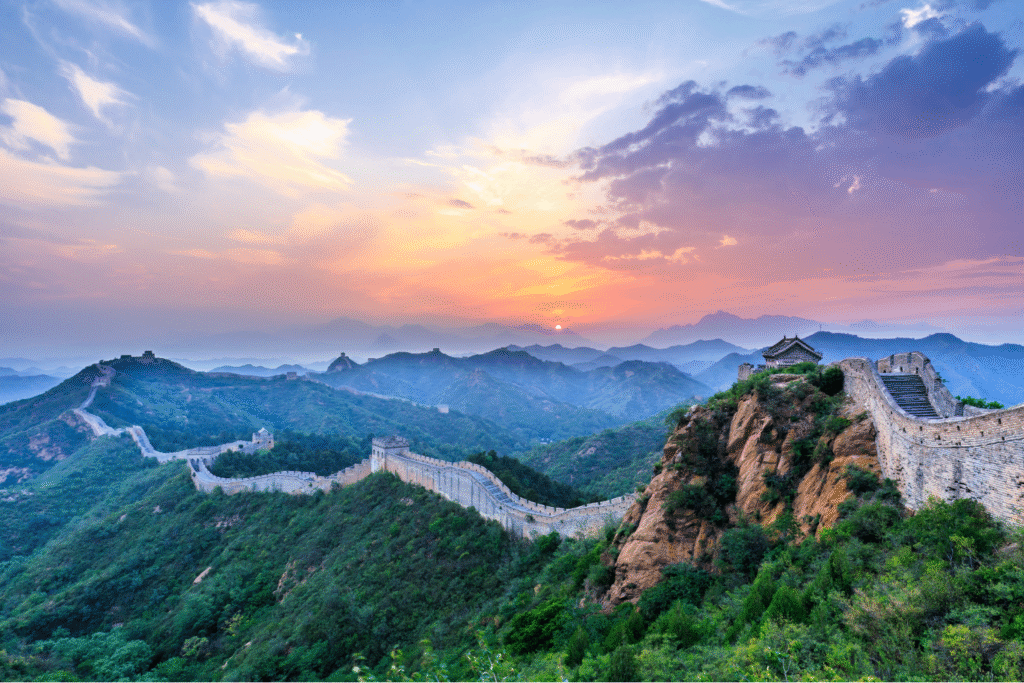
The Great Wall of China is a monument in Chinese history that stretches across northern China showing how different dynasties shaped the country. The Wall began construction under the Qin Dynasty and became a culmination of effort across generations to strengthen and lengthen it.
The Great Wall is also tied to many cultural stories, including the well known legend of Lady Meng Jiang. For our first CSS blog, we are sharing five fun facts that show the history, culture, and stories behind the Great Wall.
More than Seven Dynasties Shaped the Great Wall
The Great Wall of China is an ancient work of the past with its history spanning across more than seven dynasties. The culmination of effort across the span of more than 2000 years created the 21,196km wonder of the world we see today. The Wall was originally fragments that erupted during the Warring States Period. After this period, the first emperor ordered that it be restructured into a unified structure to protect his nation from Xiongnu people. Here’s a list of some of the other dynasties and their contributions:
Han Dynasty (206 BC – 220 AD): Strengthened and extended the Great Wall along the northern border, spanning a staggering eight thousand kilometers.
Sui Dynasty (581–618): Rebuilt long lengths of the Wall at a large scale to prepare for threats instigated by the north.
Tang Dynasty (618–907): Did not build or repair the Wall because their military strength made it so northern defenses were unnecessary.
Song Dynasty (960 to 1279): Focused on trade and economic growth while building and reinforcing northern walls to defend against the Liao, Western Xia, and Jin.
Jin Dynasty (1115 to 1234): Controlled northern China and built their own newer sections of the Great Wall, but their defenses were unable to stop the Mongol Empire, which led to the rise of the Yuan Dynasty.
Yuan Dynasty (1271 to 1368): Ruled by the Mongols, the Yuan Dynasty stopped all Great Wall construction because China and Mongolia were no longer at war.
Ming Dynasty (1368 to 1644): After the Mongol rule during the Yuan Dynasty collapsed, the Ming rebuilt and strengthened the Great Wall over a hundred year project, creating most of the remaining Wall we see today, including famous sections like Badaling and Mutianyu near Beijing.
From the Qin dynasty all the way to the Ming, the Great Wall shows how each dynasty left their mark in creating this massive cultural monument we see today.
The Great Wall Has Sticky Rice in it!
Believe it or not, the Great Wall of China was built using sticky rice. Generally speaking, a lot of different materials were used for its construction, but perhaps the most shocking is the use of this food.
By mixing the sticky rice with lime, the Chinese were able to create a firm, long lasting, and water resistant mortar that could be used to hold the Wall together. This worked because sticky rice contains amylopectin, which is a highly branched starch molecule that helps the mixture bind tightly together.
Beacon Tower System Along the Wall
The Great Wall of China had its own communication system built right into it! Beacon towers ran along the wall with the purpose of helping soldiers send fast military messages across huge distances.
When enemy forces were spotted from these watchtowers, soldiers stationed in their posts sent alerts to other towers using:
- Smoke signals during the day
- Fire signals at night
When seeing one of these signals, an adjacent tower would create the same signal starting a chain reaction that updated soldiers far away.
Various materials were used for the signals transmitted from the beacon towers. Wolf Dung was especially potent in producing thick smoke that was long lasting, with properties that let it rise high into the sky. Wolf Dung signals were famous enough to be granted its own name, “狼烟” (láng yān), meaning “wolf smoke.”
These towers also functioned as mini bases of operations for soldiers. They often lived inside them, storing food, weapons, and even raising animals on lower floors.
For complete visibility, these towers were often built on mountain peaks and high ridges or near the wall. They were spaced 2-5 kilometers apart, which was close enough for other towers to see yet still far apart that resources weren’t being wasted.
A Love Story That Shook the Great Wall: Lady Meng Jiang
One of the Four Great Chinese Folktales takes place at the Great Wall of China. The tragic story of Lady Meng Jiang (孟姜女 / Mèng Jiāngnǚ), is one of the most well known love legends passed down from generation to generation.
The story begins when Lady Meng Jiang’s husband is taken away just a few days after their wedding. Emperor Qin (Qin Shi Huang / 秦始皇), had thousands of men forced into labor to build and reinforce his Great Wall.
After several months had passed, Lady Meng Jiang dreamed of her husband freezing and calling out to her. Worried from this dream, Lady Meng Jiang traveled north to bring her husband warm clothes.
However, upon arriving at the wall she was overcome with grief at the news that her husband had already perished from the harsh conditions. His remains lay buried within the foundation of the wall. Grief had overwhelmed Meng Jiang and she cried so intensely that a section of the Wall collapsed, revealing his remains.
Although many other variations of this story circulate from person to person, the message of Lady Meng Jiang remains the same. She represents loyalty, grief and the voices of ordinary people who had suffered from the long history of the Great Wall of China.
Soldiers’ Wives Left Artwork on the Great Wall
While the Great Wall of China is often associated with strict military structure and the ruling power of the emperors, parts of it carried pieces of everyday life as well.
During the Ming Dynasty, the wives of soldiers often decorated certain sections of the Wall with small drawings and symbols. These artworks included clouds, lotus blossoms, and “fluffy balls” (绣球 / xiuqiu). These symbols traditionally meant peace, love, and good fortune.
This side of the Great Wall’s history recounts a softer human side that shows how people cared for their loved ones even in difficult times.
Conclusion
The Great Wall of China is a vast collection of stories, dynasties, people, and traditions woven together over thousands of years. From sticky rice mortar paste to vast ancient signal towers, profound stories of love and artwork left by soldiers’ families, every part of the Great Wall contains a piece of China’s history.
We hope these five fun facts helped you learn more about the Great Wall, some facts you may have already known while others perhaps were a surprise to you! Our personal favourite was the story of Meng Jiang and her resilience, love for her husband, and the tragedy of their circumstance.
Excited to learn more about Chinese culture? Stay tuned for more CSS blogs as we explore more of the stories and heritage together!
FAQs About The Great Wall
How long is China's Great Wall and why was it built?
The Great Wall of China stretches a vast 20,000km! It goes through mountains, deserts and grasslands with many towers along it to protect ancient China from northern invasions. The Wall later expanded throughout multiple dynasties into the impressive defence system that it is today.
How long will it take to walk the Great Wall of China?
Walking the entire Great Wall of China, around 20,000km across all the sections made by Ming, QIn, Han, and many more would take roughly 17 to 18 months at a pace of 20km per day. This estimate for the length of the Wall doesn’t even account for the rest days and terrain! In reality completing the entire trek of the wall could take well over a year and a half.
Is the Great Wall visible from space?
No, the Great Wall of China is not able to be seen from space from the naked eye. This is a popular myth. The wall was made with materials that can blend in with the surrounding terrain, and the width of it was also narrow. Mixing these factors with its texture, colour and the distance from afar and you won’t be able to see it at all.